
Is the AC Leaking?
Air conditioner refrigerant leaks cause HVAC systems to malfunction during the year’s hottest months. AC systems may cease to blow cool air or, in some cases, produce warm air. Since air conditioning units are complex systems with various components that must work together, figuring out the source can be tough for homeowners without experience.
Frozen Evaporator Coils Play a Key Role
 Evaporator coils are usually located inside the blower compartment of an air conditioner. Their purpose is to retain cold air conditioning refrigerant to remove indoor heat. If an evaporator coil begins to leak, it can cause higher monthly energy bills.
A chemical reaction between copper and humidity causes evaporator coil leaks. When volatile organic compounds begin to corrode the copper, a refrigerant leak is created. If mold has formed, it can damage the copper by causing frozen evaporator coils.
Reducing volatile organic compounds in evaporator refrigerant can prevent a leak. This will also reduce indoor chemicals. If an AC coil begins to leak, it may create dangerous toxins that must be eliminated immediately.
Warm Indoor Temperatures
AC refrigerant leaks affect an air conditioner’s ability to cool air effectively. Since air may still travel through the vents, it can be difficult for homeowners to recognize the broken AC immediately. If the AC has been running for several hours, but the indoor temperature still feels warm, this is a sign of system damage.
An average cooling cycle should last approximately 20 minutes. The desired temperature is never met if the AC is constantly running. Not only does this affect indoor comfort, but it can also mean higher bills. An HVAC system that is not energy efficient can cost hundreds of extra dollars during the summer.
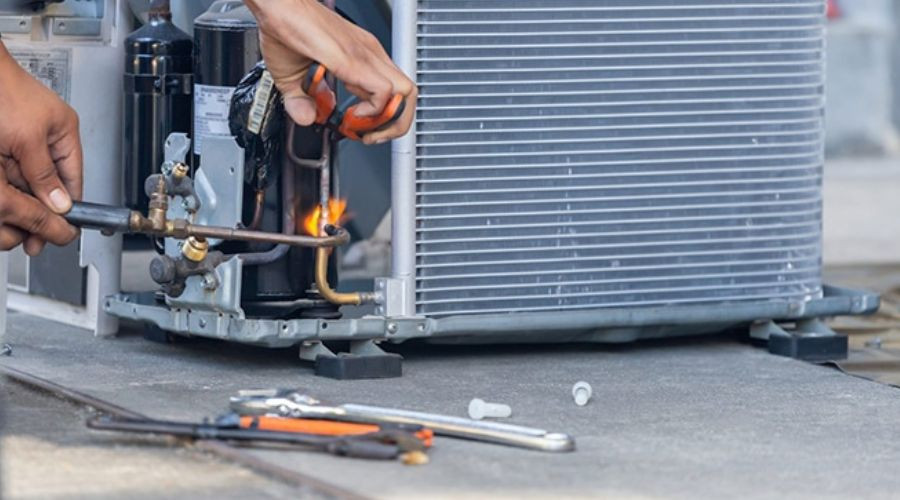
Refrigerant leaks are not uncommon in older air conditioners. If the system was undercharged during installation, new refrigerant can be added relatively easily. If it is low due to frozen evaporator coils, a refrigerant leak detector can help. Trying to repair refrigerant leaks without the proper tools can cause more damage in the long run.
Strange Sounds
 A noisy air conditioner is not normal, even for older units. If homeowners notice a hissing or gurgling sound, it is likely due to a leak. Usually, this is one of the first signs of a problem.
Once temperatures begin rising, these sounds are more likely to occur. This is because the AC has not been used in several months and may need time to warm up. Annual maintenance will prevent problems from occurring during the hotter months, but it should be scheduled early. If there is an issue with the compressor, this can affect refrigerant levels when they are needed most.
About Air Works Heating & Air
Air Works Heating & Air specializes in heating and cooling services in Wake Forest, NC. Its technicians have the tools and expertise to diagnose any cooling issue effectively and always offer detailed estimates and explanations before starting any work in the home. Call AirWorks Heating & Air today to learn more about its $40 off coupon for evaporator coil services.
)
Distribution Links +
- wicz.com
- central.newschannelnebraska.com
- metro.newschannelnebraska.com
- southeast.newschannelnebraska.com
- midplains.newschannelnebraska.com
- northeast.newschannelnebraska.com
- plattevalley.newschannelnebraska.com
- panhandle.newschannelnebraska.com
- rivercountry.newschannelnebraska.com
- lifestyle.mykmlk.com
- lifestyle.3wzfm.com
- lifestyle.southernsportstoday.com
- lifestyle.thepodcastpark.com
- lifestyle.680thefan.com
- lifestyle.xtra1063.com
- lifestyle.953hlf.com
- lifestyle.rewind1019.com
- lifestyle.us983.com
- lifestyle.countrylegends1059.com
- lifestyle.967wshv.com
- lifestyle.1045thedan.com
- michigan.yournewsnet.com
- lifestyle.earl983.com
- lifestyle.maverick1023.com
- lifestyle.magic979wtrg.com
- lifestyle.1077lakefm.com
- lifestyle.kbew98country.com
- lifestyle.kccrradio.com
- https://smb.bogalusadailynews.com
- https://smb.magnoliastatelive.com
- https://smb.natchezdemocrat.com
- https://smb.orangeleader.com
- https://smb.panews.com
- https://smb.picayuneitem.com
- https://smb.southwestdailynews.com
- https://smb.alabamanow.com
- https://smb.albertleatribune.com
- https://smb.andalusiastarnews.com
- https://smb.lobservateur.com
- https://smb.panolian.com
- https://smb.alexcityoutlook.com
- https://smb.americustimesrecorder.com
- https://smb.atmoreadvance.com
- https://smb.amnews.com
- https://smb.austindailyherald.com
- https://smb.americanpress.com
- https://smb.dailyleader.com
- https://smb.oxfordeagle.com
- https://smb.vicksburgpost.com
- https://smb.bluegrasslive.com
- https://smb.claiborneprogress.net
- https://smb.clantonadvertiser.com
- https://smb.brewtonstandard.com
- https://smb.demopolistimes.com
- https://smb.elizabethton.com
- https://smb.greenvilleadvocate.com
- https://smb.jessaminejournal.com


)